Necker Cube
A wireframe cube that flips between two orientations.
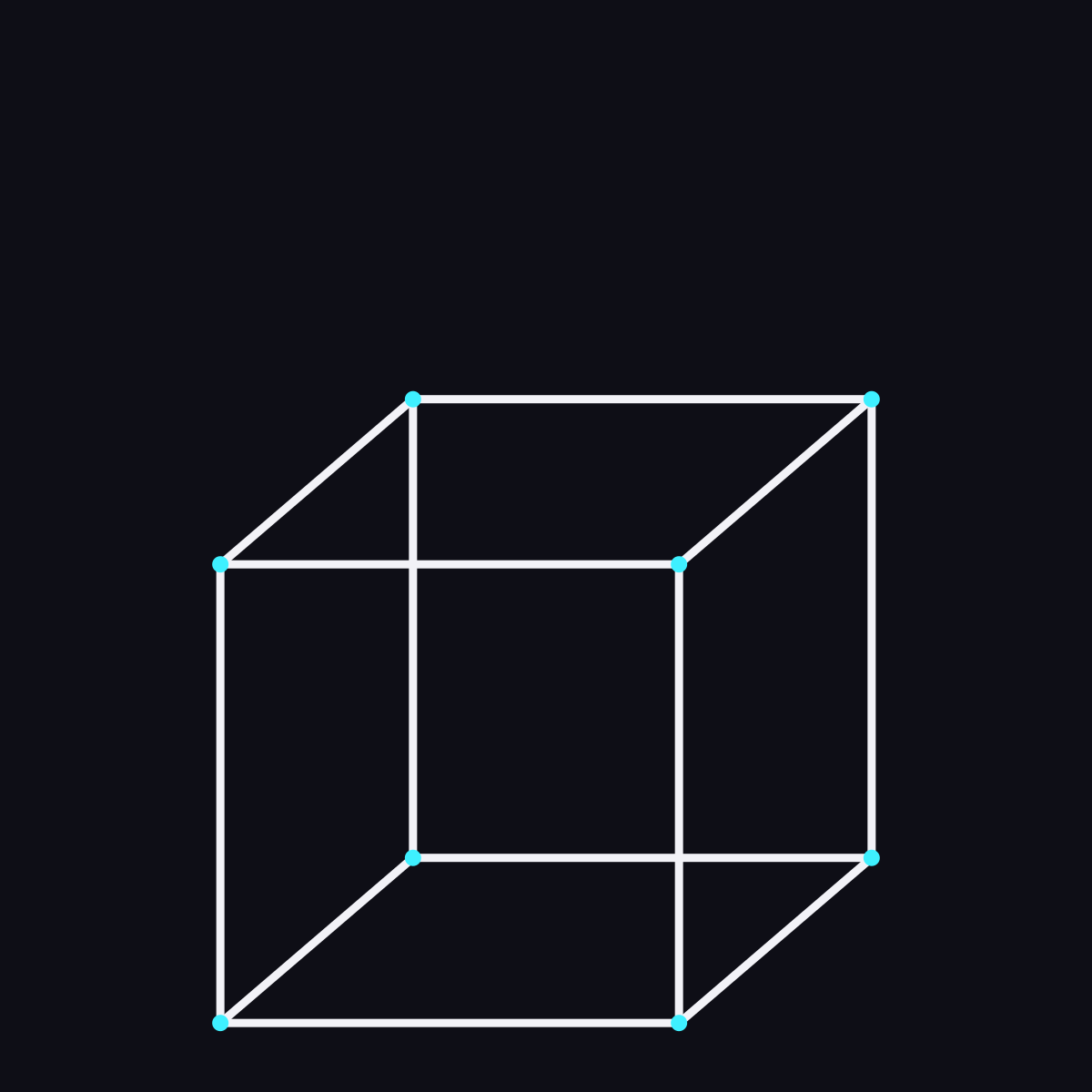
What do you see?
A simple wireframe cube drawn with twelve lines. At first one square seems to be at the front, facing you, with the cube receding up and to the right. Keep looking and the cube suddenly flips: the other square jumps to the front and the cube points down and to the left. Once you have seen both versions, it keeps switching between them, sometimes whenever you blink.
Get Necker Cube on a tee, mug or blanket
Printed to order with the OpticalIllusions.com wordmark.
How it works
The Necker cube is an ambiguous figure. The lines on the page are consistent with two different three-dimensional cubes, and nothing in the drawing tells your brain which one is correct. There is no shading, no perspective and no overlap to indicate which edges are nearer. Faced with two equally good interpretations, the visual system does not blend them into a compromise. It chooses one, then later switches to the other.
This switching is called perceptual bistability, and it is studied as a window into how the brain chooses between competing interpretations. One explanation is that neural populations representing each interpretation compete. When one is active, it suppresses the other. Over time the active population adapts and weakens, while the suppressed one recovers, and eventually the balance tips and the perception flips. The process then repeats.
Attention and intention also play a role. You can often encourage a particular interpretation by focusing on a particular corner or by imagining that a certain face is at the front. Where you look matters: fixating on different vertices biases the cube one way or the other. But you cannot fully control it, and with prolonged viewing the cube will usually flip on its own.
The timing of flips is variable, but tends to follow a characteristic distribution in which most periods are a few seconds long and a few are much longer. Similar patterns are found in other bistable phenomena, such as binocular rivalry, in which each eye sees a different image and perception alternates between them. Researchers have studied whether the rate of switching is linked to age, mood and attention, and have used brain imaging to track activity in visual and frontal areas during flips.
The Necker cube also reminds us that the drawing itself is flat. The cube exists only in the interpretation, and the interpretation can be either of two shapes. This is one reason why the cube is a favourite symbol for the idea that perception is an active guess rather than a passive recording.
History
Swiss crystallographer Louis Albert Necker described the effect in 1832 after noticing that drawings of crystals seemed to reverse in depth while he was looking at them. The figure has since become a standard example of ambiguous perception in psychology, philosophy and art. The cube here was drawn for OpticalIllusions.com.
Try it
- Stare at the lower-left corner, then at the upper-right corner, and see which face jumps forward.
- Count how many flips you see in one minute.
- Blink deliberately to trigger a flip.
- Try to hold one version for as long as possible.
Written by K.R. for OpticalIllusions.com · Updated . Illusion artwork © The Wizard Of Sales, LLC. Feel free to share a link; see our terms for reuse.
Related illusions
 Impossible & ambiguous figuresRubin VaseA golden vase, or two dark profiles facing each other.
 Impossible & ambiguous figuresImpossible TriangleThree bars meet at right angles to form a triangle that cannot exist.
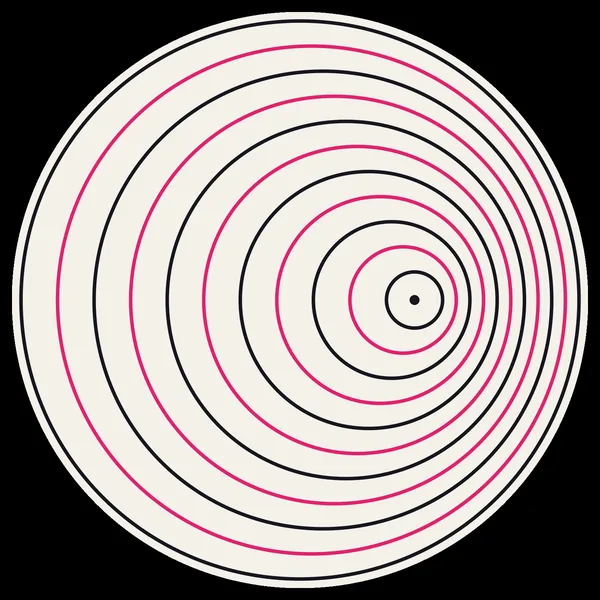 InteractiveMotion illusionsStereokinetic RingsTurning flat circles that suddenly pop out as a cone or tunnel.
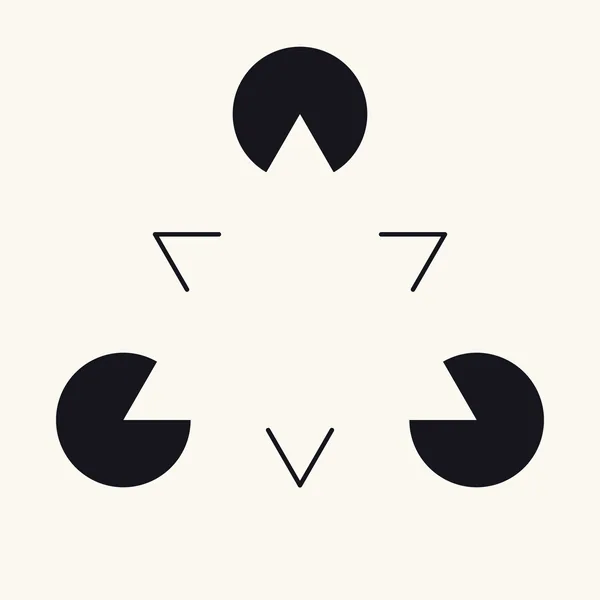 Geometric illusionsKanizsa TriangleA bright white triangle appears from nothing but three cut-out discs.