Poggendorff Illusion
A straight diagonal looks misaligned where a bar crosses it.
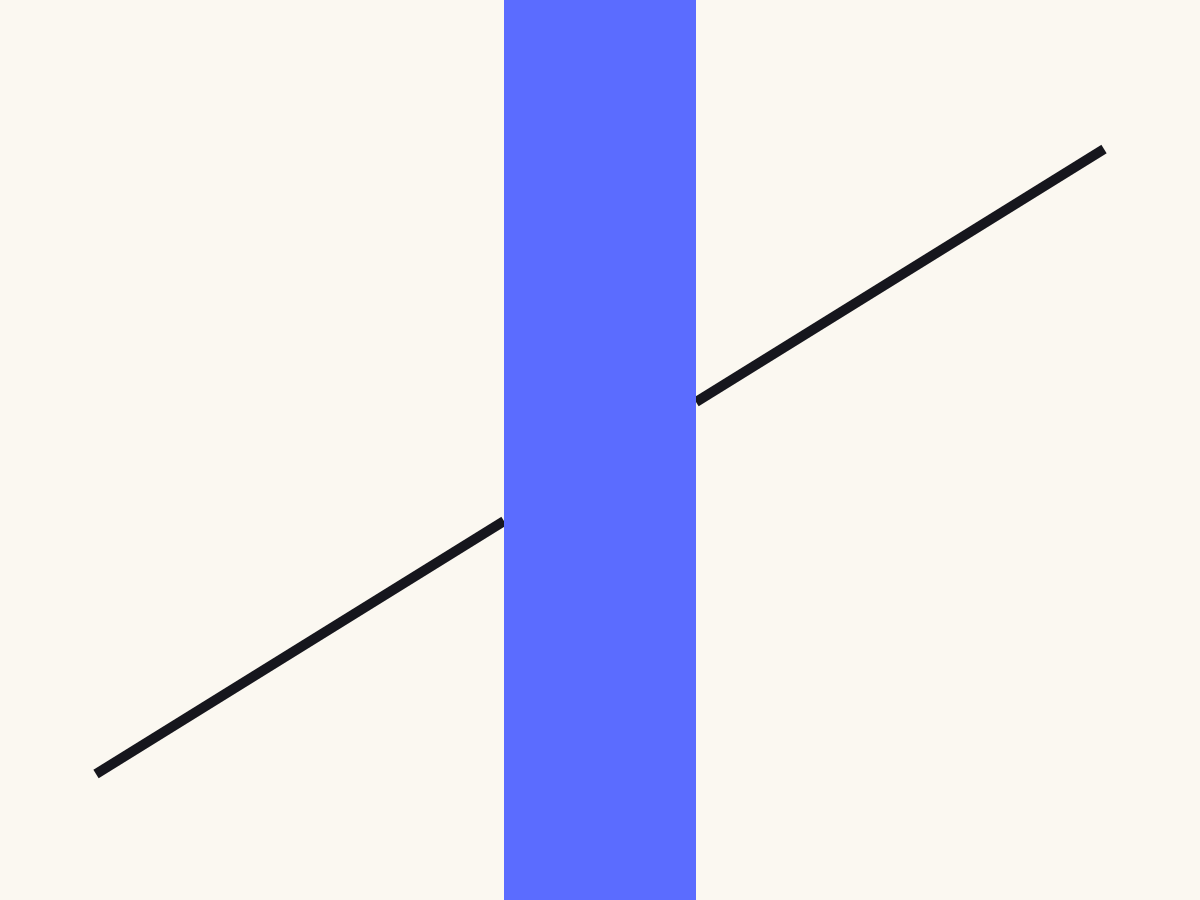
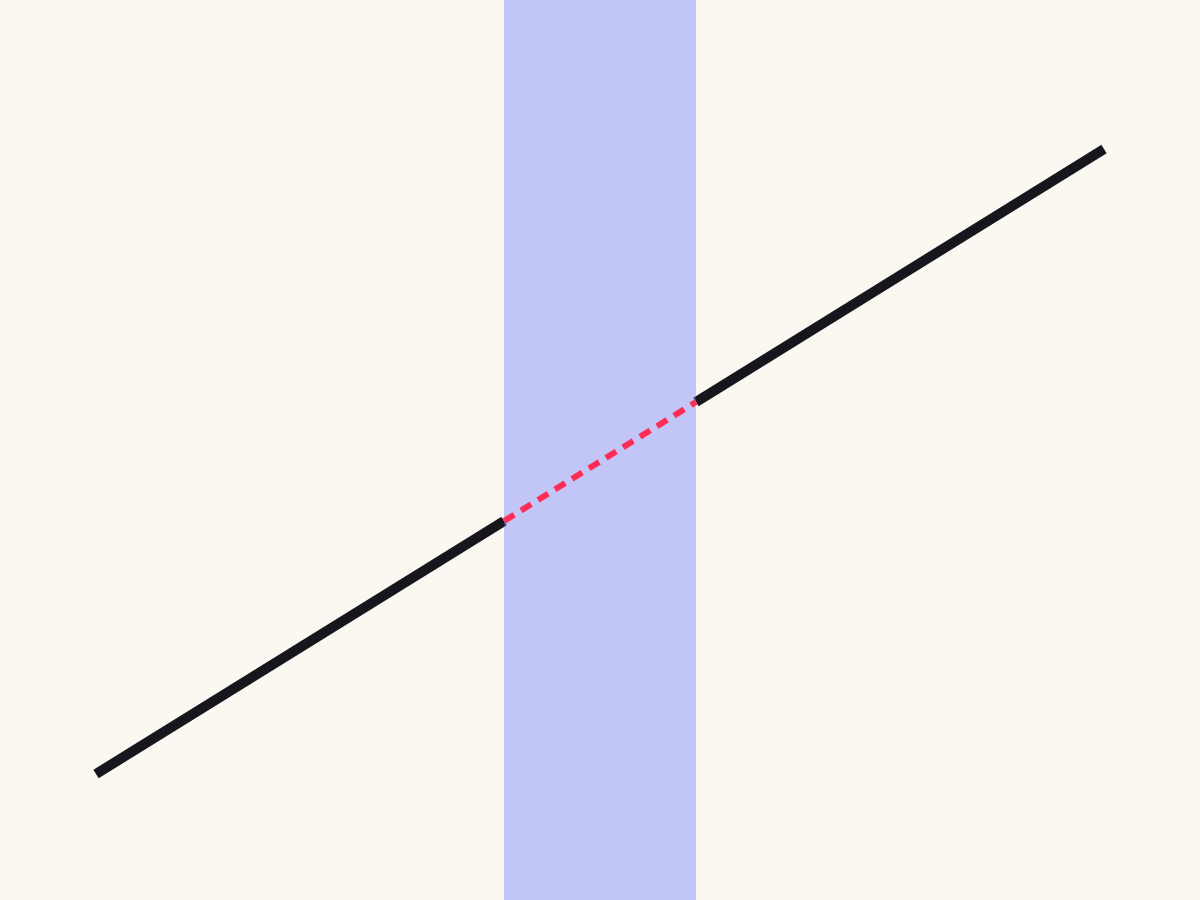
What do you see?
A diagonal line runs up toward a vertical blue bar, disappears behind it, and comes out the other side. The right-hand part looks as if it emerges a little too high, not quite in line with the left-hand part. Press Reveal to make the bar transparent: the two pieces form one perfectly straight line.
How it works
The Poggendorff illusion shows how poorly the visual system extrapolates a line across a gap. When a diagonal line is interrupted by a bar, you have to judge where its continuation should appear on the other side. Almost everyone misjudges it in the same direction.
Several explanations contribute. The first is angular expansion, which also drives the Zöllner and Hering illusions. Where the diagonal meets the edge of the bar, it forms an acute angle. The visual system tends to see acute angles as larger than they are, which rotates the line slightly toward the horizontal, so it seems a little flatter than it really is. Extrapolating a flatter line across the bar points to a spot below the real continuation, so the true continuation seems too high.
A second explanation concerns the bar itself. Our sense of where the line enters and exits depends on how wide the gap seems and on how we position the endpoints. The edges of the bar can pull the perceived end of the line toward the perpendicular, shifting the estimated path. Studies show the illusion grows as the bar gets wider and as the angle of the line becomes shallower, both of which increase the room for error.
A third idea treats the figure as a scene in depth. A diagonal disappearing behind a surface might be interpreted as a line slanting away in three dimensions, and the expected continuation is computed under that assumption.
Experiments that remove parts of the figure help separate these factors. If only the acute angles are shown, the illusion remains strong. If only the obtuse angles are shown, it nearly disappears. That suggests the acute angles, and the way they are perceived, play a central role.
The illusion has practical consequences. Surgeons, radiologists and engineers who must judge whether a line or a vessel continues across an obstruction can be influenced by the same bias, and some training materials for pilots and drivers mention similar alignment errors.
History
German physicist Johann Christian Poggendorff discovered this illusion in 1860 in a figure sent to him by Johann Zöllner, who had found his own illusion in the same drawing. Poggendorff noticed that the diagonal lines in the figure appeared misaligned where they were interrupted. The diagram here was drawn for OpticalIllusions.com.
Try it
- Press Reveal to see the line pass straight through.
- Lay a ruler along the left-hand segment and see where it meets the right-hand one.
- Imagine the bar is wider: the misalignment seems to grow.
- Rotate the screen and notice that the error follows the angle of the line.
Written by K.R. for OpticalIllusions.com · Updated . Illusion artwork © The Wizard Of Sales, LLC. Feel free to share a link; see our terms for reuse.
Related illusions
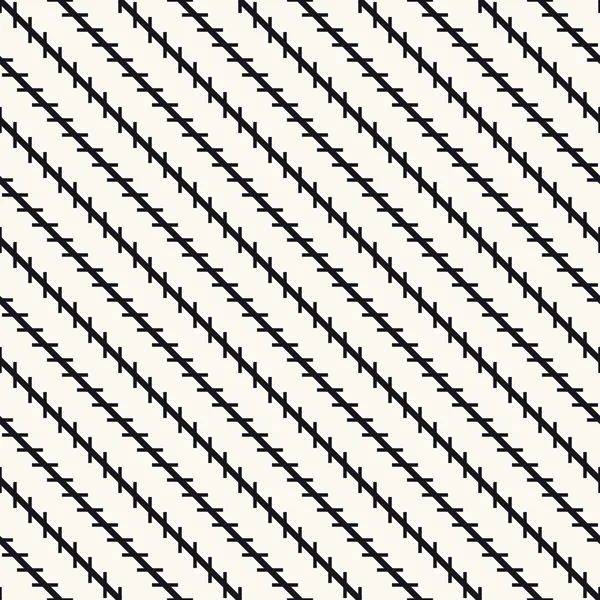 Geometric illusionsZöllner IllusionShort hatches make long parallel lines seem to tilt toward each other.
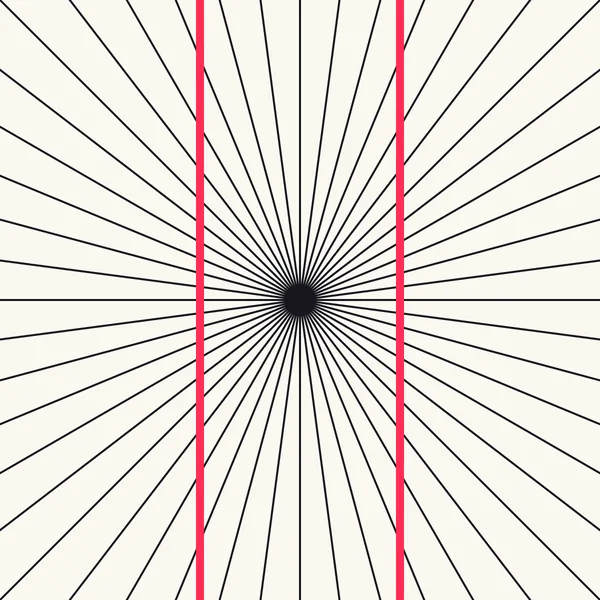 Geometric illusionsHering IllusionTwo straight red lines bulge apart over a burst of rays.
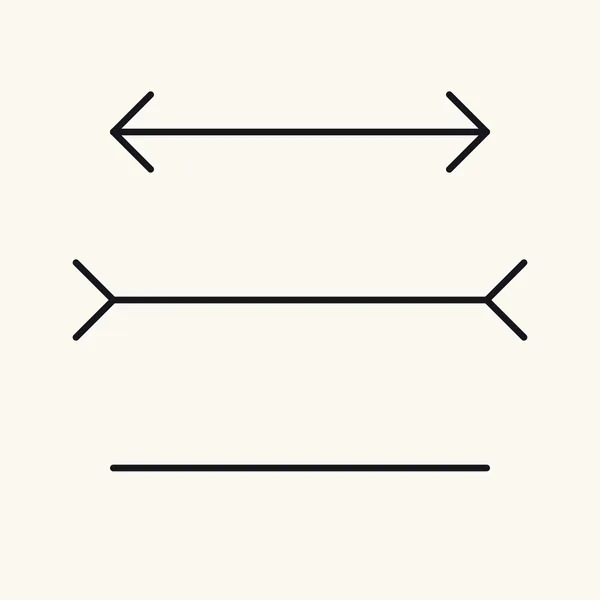 InteractiveGeometric illusionsMüller-Lyer IllusionThree identical lines that look clearly different in length.
 Geometric illusionsKanizsa TriangleA bright white triangle appears from nothing but three cut-out discs.