Troxler Fading
Stare at the cross and the soft colour spots vanish into grey.

What do you see?
Look straight at the small black cross in the middle and do your best not to move your eyes. Within ten to twenty seconds, the fuzzy coloured spots around the edge begin to fade. One by one, or all at once, they dissolve into the grey background until the picture looks almost empty. Move your eyes even slightly and every colour snaps back.
How it works
Your visual system is built to report change. Photoreceptors and the neurons that follow them adapt to steady input, turning down their response when a stimulus stays the same. This is extremely useful: it is why you stop noticing the feel of your clothes, the hum of a fridge, or the blood vessels that lie in front of your own retina and cast permanent shadows on it.
Normally your eyes never hold still long enough for this adaptation to erase anything you are looking at. Tiny involuntary movements, including drift, tremor and micro-saccades, constantly shift the image by small amounts, so edges move across receptors and keep refreshing the signal. Experiments in which an image is optically stabilised on the retina, moving exactly with the eye, show that a stabilised image fades away completely within seconds.
Troxler fading is a natural version of that experiment, and it works best under two conditions this picture is designed to meet. First, the spots are in your peripheral vision, where receptive fields are large. A small eye movement barely shifts a large receptive field relative to the image, so the refreshing effect is weak. Second, the spots have soft, blurry edges. A sharp edge produces a big change in input even with a tiny shift; a gentle gradient produces almost none. With little change to signal, adaptation wins and the spots are absorbed.
What fills the space? Not black, but the surrounding grey. The brain does not leave a hole when a signal fades; it fills the region in with the properties of the area around it, the same filling-in process that hides your blind spot. That is why the colours seem to be replaced by background rather than simply dimming.
The moment you move your eyes, the spots land on fresh, unadapted receptors and reappear at full strength. Blinking can also bring them back. Researchers have found that micro-saccades tend to occur just before faded targets reappear, which supports the idea that these tiny eye movements are the brain's built-in defence against fading.
History
The effect is named after Swiss physician and philosopher Ignaz Paul Vital Troxler, who described in 1804 how objects in peripheral vision fade during steady fixation. It has since become a standard demonstration of sensory adaptation and visual filling-in. The colour field on this page was made for OpticalIllusions.com.
Try it
- Use the 20-second timer and keep your gaze locked on the cross.
- Sit a little closer so the spots fall further into your peripheral vision.
- Once they vanish, flick your eyes to a corner and watch them reappear.
- Try counting how long it takes each colour to fade: fainter ones usually go first.
Written by K.R. for OpticalIllusions.com · Updated . Illusion artwork © The Wizard Of Sales, LLC. Feel free to share a link; see our terms for reuse.
Related illusions
 InteractiveMotion illusionsMotion Aftereffect SpiralWatch a spinning spiral for 30 seconds and still things start to move.
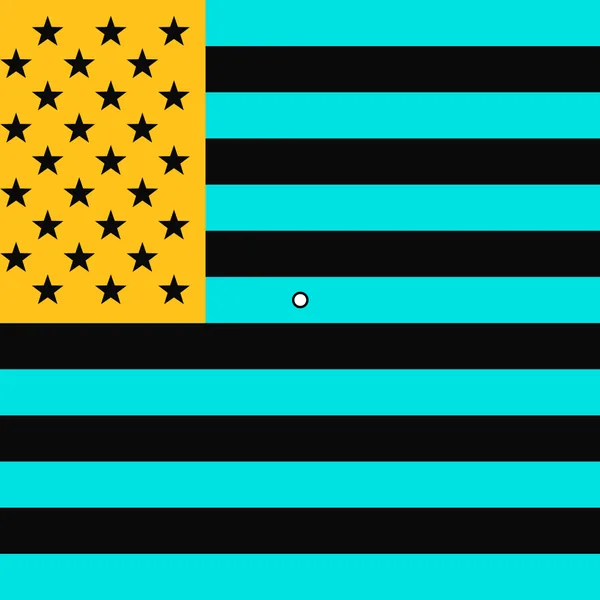 InteractiveColour illusionsAfterimage FlagStare at a cyan, black and yellow flag and a red, white and blue one appears.
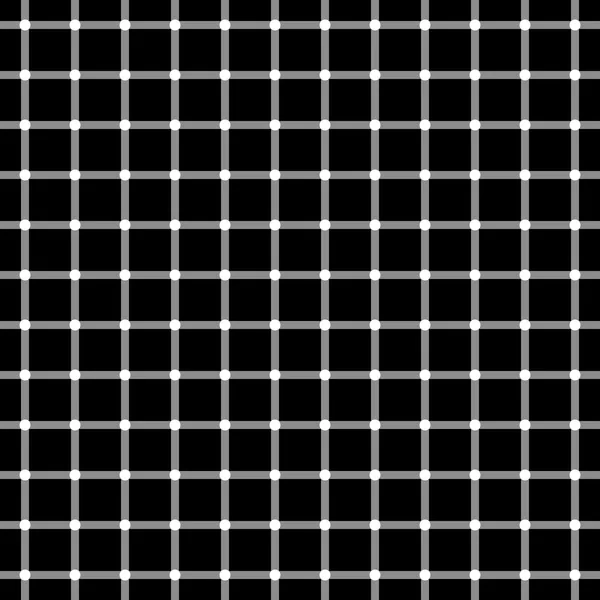 Brightness illusionsScintillating GridWhite dots on a grey grid seem to flash with black spots.
 Colour illusionsWatercolour IllusionA thin orange edge tints a whole white region pale orange.