Scintillating Grid
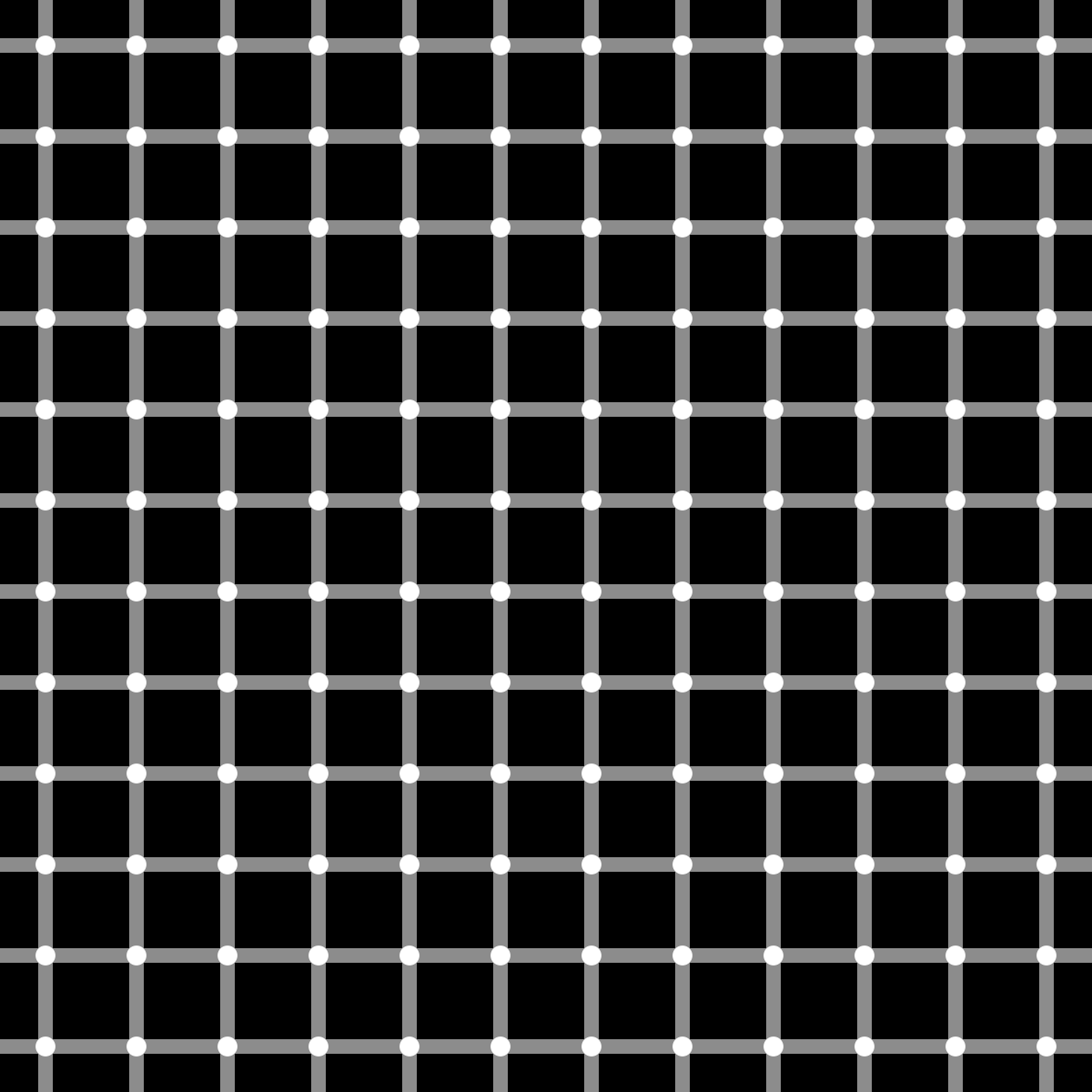
White dots on a grey grid seem to flash with black spots.
What do you see?
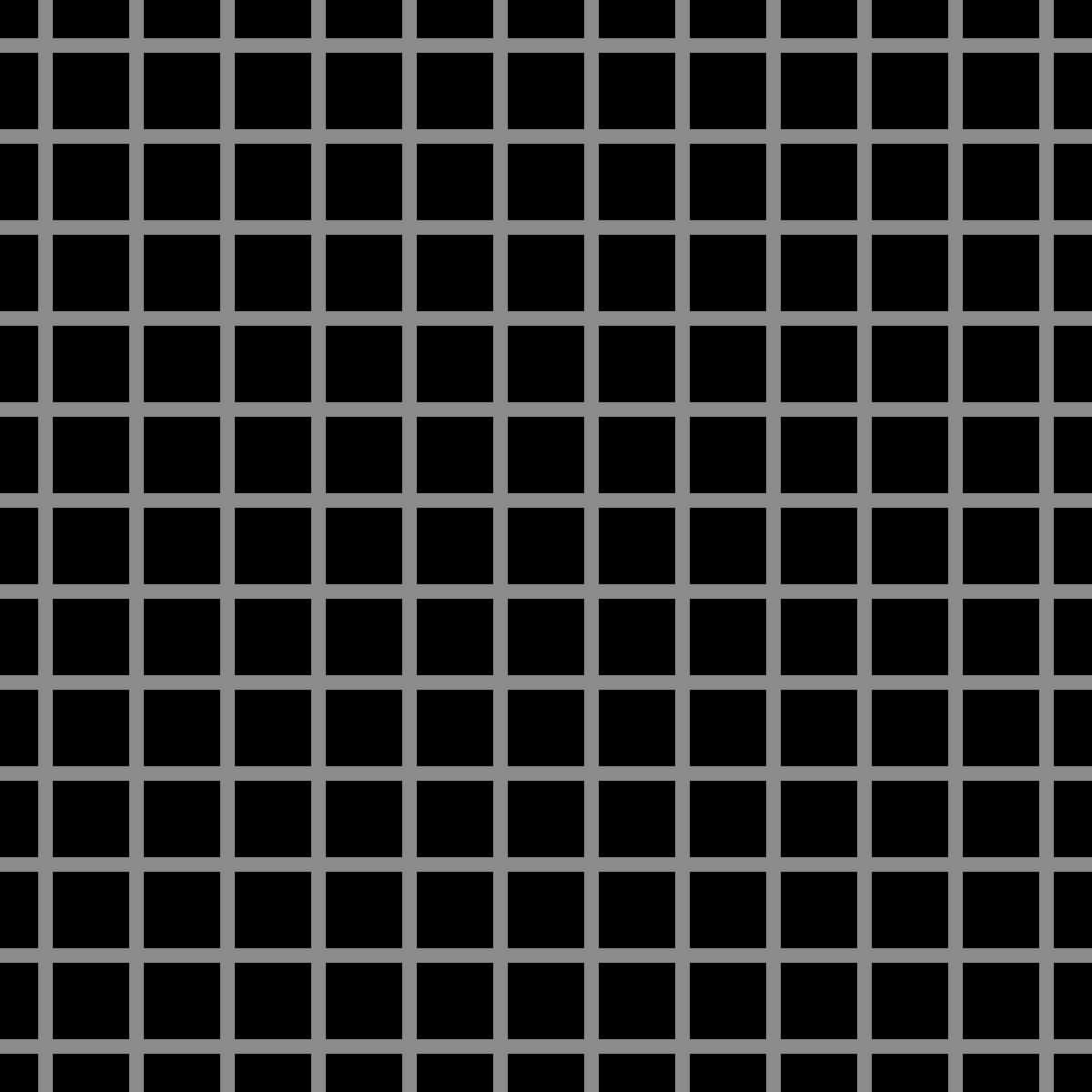
A black background crossed by grey lines, with a small white disc at every crossing. Let your eyes move around the picture and dark dots seem to appear and disappear inside the white discs, flashing on and off like tiny lights. Look directly at any disc and it is plain white. There are no black dots anywhere in the image.
Get Scintillating Grid on a tee, mug or blanket
Printed to order with the OpticalIllusions.com wordmark.
How it works
The scintillating grid is a stronger cousin of the Hermann grid. Adding a bright disc at each crossing turns faint grey smudges into vivid black dots that seem to flash, or scintillate, as your eyes move.
The illusion depends on a combination of features. The background must be dark, the grey lines must be of intermediate brightness, and the discs at the crossings must be bright and of the right size relative to the lines. Studies by the scientists who described it showed that the effect weakens dramatically when the lines are made very thin, when the discs are too large or too small, or when the contrast between lines and background is reduced.
As with the Hermann grid, part of the story is centre-surround processing. A white disc at a crossing is surrounded on four sides by moderately bright grey lines, which increase the inhibition on cells centred on the disc. That pushes the perceived brightness of the disc down. The dark background also contributes, because it makes the discs and lines stand out and sets up strong contrasts across the whole figure.
The scintillation itself seems to depend on eye movements. When you look around the grid, each disc briefly lands in different parts of your visual field. In peripheral vision, where receptive fields are large and the inhibitory effect is strong, the disc looks dark; as soon as it falls into central vision, where receptive fields are small, it looks white again. The rapid back-and-forth gives the impression of flashing. Research has found that the effect weakens if the image is shown only very briefly, and it changes with the timing of saccades, which supports this link.
The scintillating grid is also sensitive to small geometric changes. Like the Hermann grid, making the lines wavy, slightly curving the grid or rotating sections of it can reduce or eliminate the dark dots. That points again to cortical mechanisms involving straight-edge detectors, not just retinal processing.
The illusion is a striking reminder that what you see in the periphery is often very different from what is actually there, and that the brain constructs a stable picture by combining glimpses from different parts of the eye.
History
The scintillating grid was discovered by Elke Lingelbach in 1994 while she was working on variations of the Hermann grid, and it was described in detail by Michael Schrauf, Bernd Lingelbach and Eugen Wist in 1997. It has become one of the most popular illusions online. The grid on this page was drawn for OpticalIllusions.com.
Try it
- Let your eyes wander: the black dots flash wherever you are not looking.
- Fix your gaze on one disc and watch the flashing settle down nearby.
- Press Reveal to remove the white discs and see the grid without them.
- Tilt your head: the effect usually survives rotation.
Written by K.R. for OpticalIllusions.com · Updated . Illusion artwork © The Wizard Of Sales, LLC. Feel free to share a link; see our terms for reuse.
Related illusions
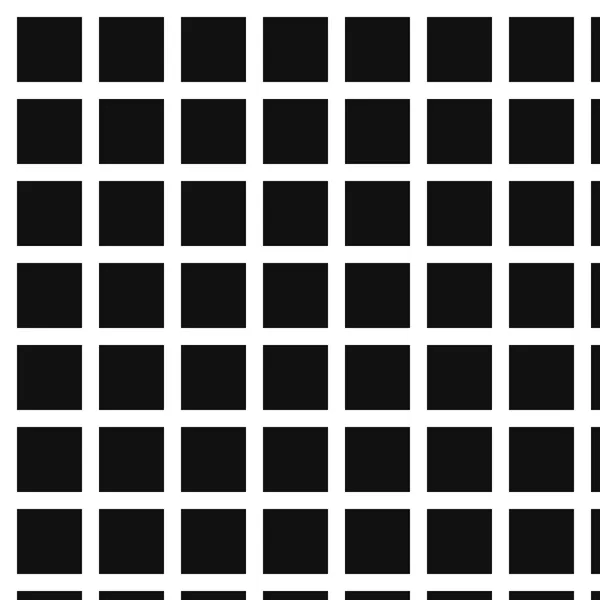 Brightness illusionsHermann GridGrey smudges flicker at the crossings of a black-and-white grid.
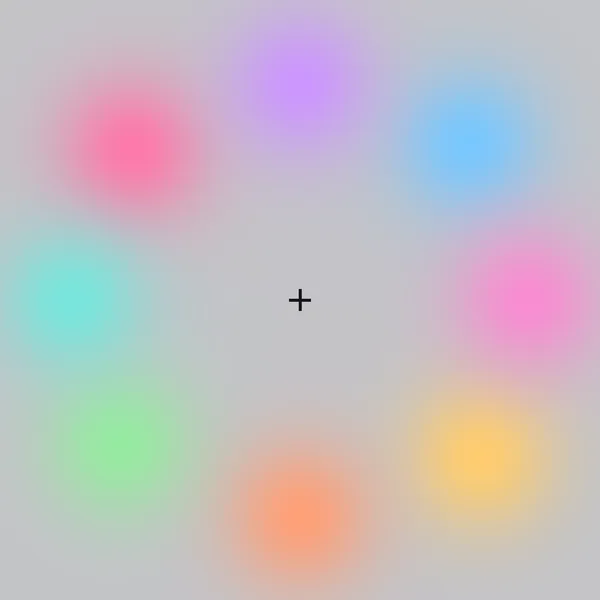 InteractiveMotion illusionsTroxler FadingStare at the cross and the soft colour spots vanish into grey.
 InteractiveBrightness illusionsCornsweet IllusionLeft and right halves are the same grey, but the left looks lighter.
 InteractiveBrightness illusionsSimultaneous ContrastA uniform grey bar looks lighter on the left and darker on the right.