Checkerboard Shadow Illusion
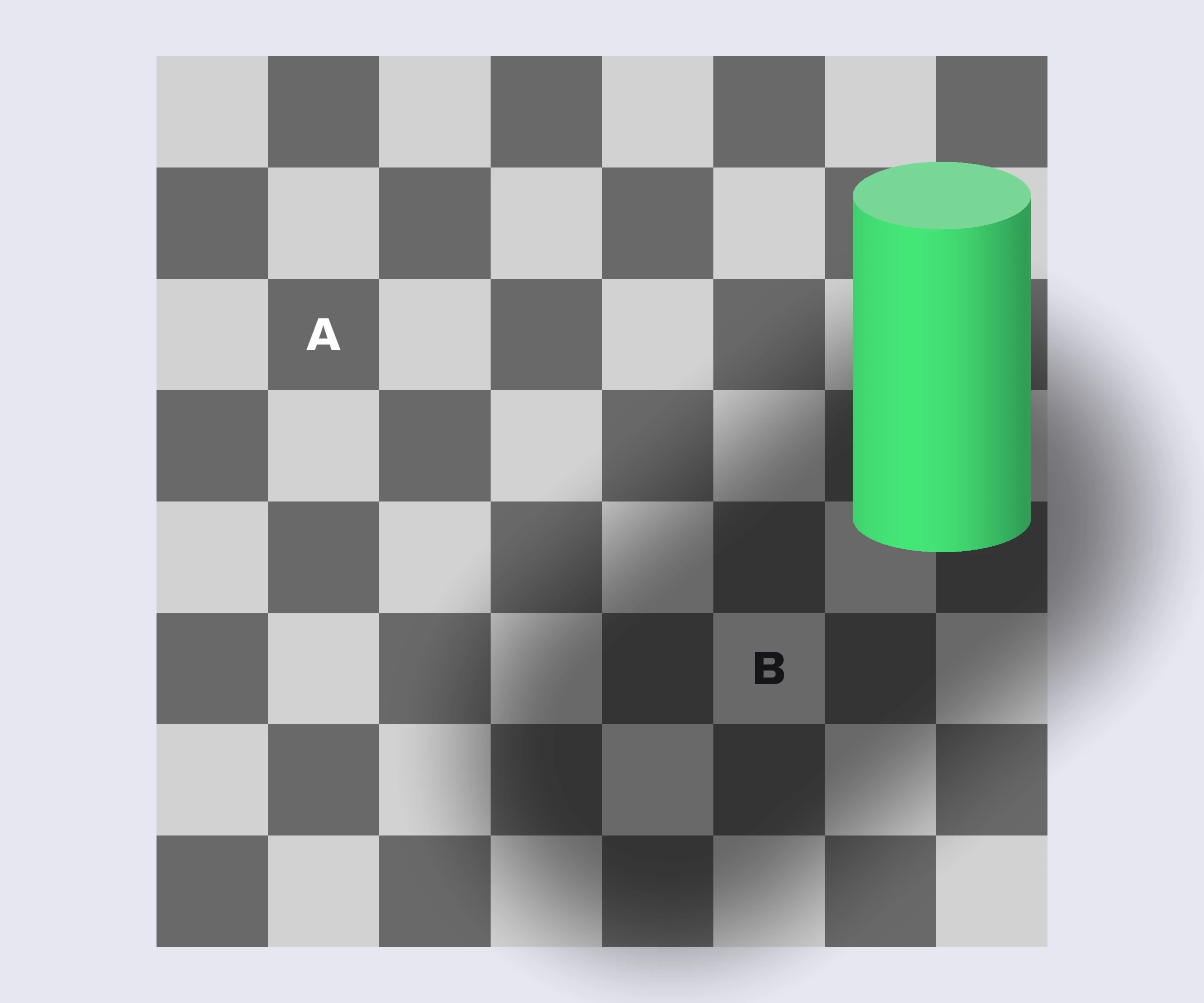
A dark square in light and a light square in shadow are the same grey.
What do you see?
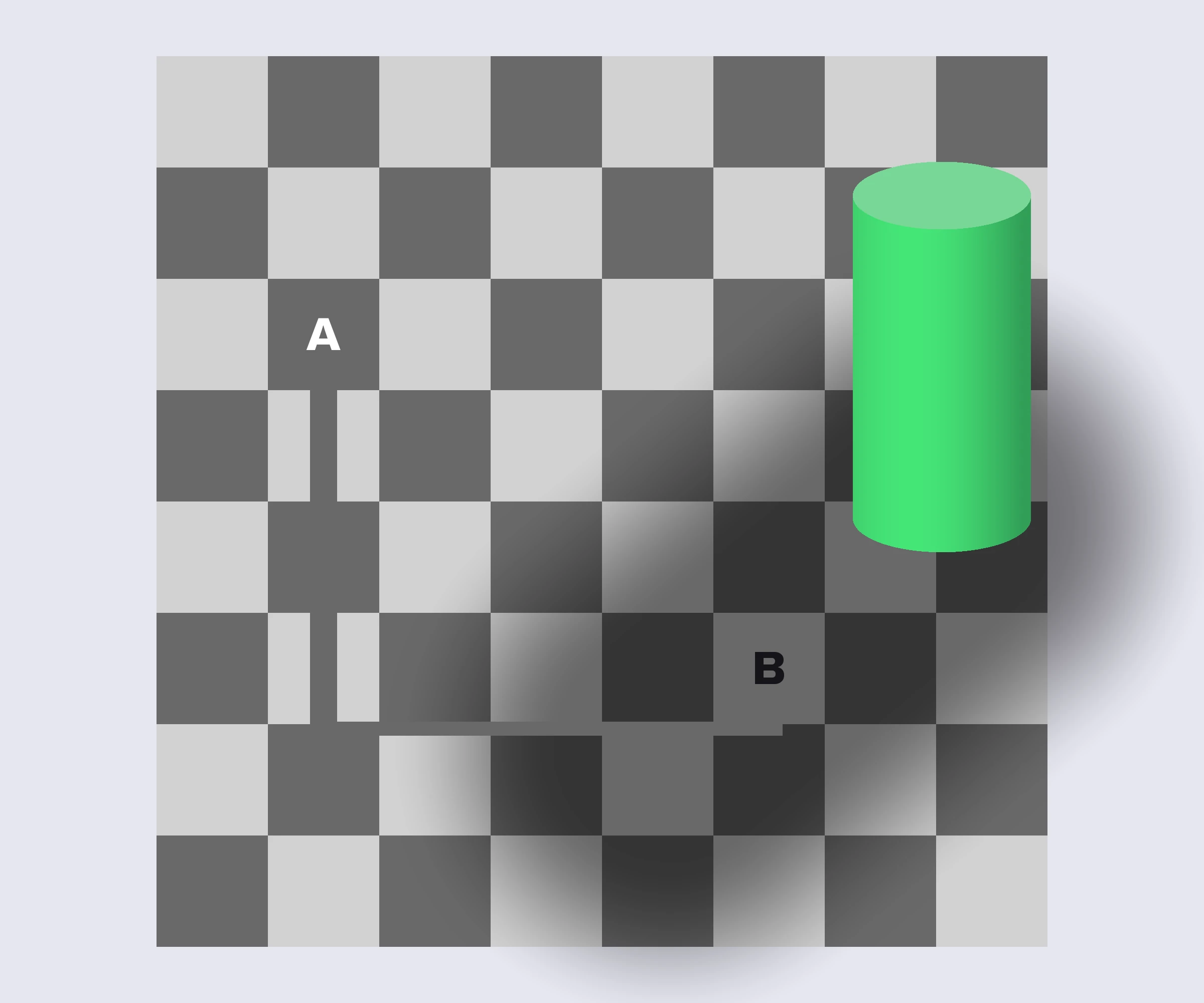
A checkerboard with a soft shadow falling across one side. Square A, in the light, looks like one of the dark squares. Square B, in the shadow, looks like one of the light squares. They are the same shade of grey, to the exact pixel. Press Reveal to join them with bars of that grey: the bars blend into both squares.
How it works
Your visual system is not a light meter. Its job is to tell you what surfaces are like, not how much light reaches your eye from each point. The amount of light from a surface depends on two things: how reflective the surface is and how brightly it is lit. A white sheet in shadow can send less light to your eye than a black sheet in sunshine, yet you still see the first as white and the second as black. This ability is called lightness constancy, and the checkerboard turns it into an illusion.
The brain uses several cues to separate surface colour from lighting. One is the checkerboard pattern itself. In the shadowed area, the squares still alternate light and dark, and B is surrounded by squares darker than it. Local contrast says that B is lighter than its neighbours, and the regular pattern implies it is a light square. A, in contrast, sits among lighter squares and looks dark.
A second cue is the shadow. Shadows have soft edges and darken everything they fall on by the same proportion, keeping the pattern intact. When the brain recognises a gradual darkening that preserves the checkerboard, it interprets it as lighting rather than paint and discounts it. The squares in the shadow are mentally brightened to compensate, so B is seen as a light square that happens to be in shade.
The result is not a mistake in any practical sense. If this were a real checkerboard, B really would be a light square. Your perception is correct about the world and wrong about the picture, which is why this kind of illusion is so instructive: it shows the brain doing exactly what it was designed to do.
This image was built so the numbers are exact. The light squares have a grey level of 210 and the dark squares 105. The shadow halves the light in its core, so B, a light square deep in the shadow, ends up at 105, identical to A. You can check it with any colour picker.
History
The classic version, with a green cylinder casting a shadow across a checkerboard, was created in 1995 by Edward Adelson, a vision scientist at the Massachusetts Institute of Technology. It became one of the best-known demonstrations of lightness perception. The board on this page is an original drawing made for OpticalIllusions.com using the same principle.
Try it
- Press Reveal to see the connecting bars.
- Cover everything except A and B with two pieces of paper with small holes.
- Download the image and check both squares with a colour picker.
- Notice that knowing the answer does not change what you see.
Written by K.R. for OpticalIllusions.com · Updated . Illusion artwork © The Wizard Of Sales, LLC. Feel free to share a link; see our terms for reuse.
Related illusions
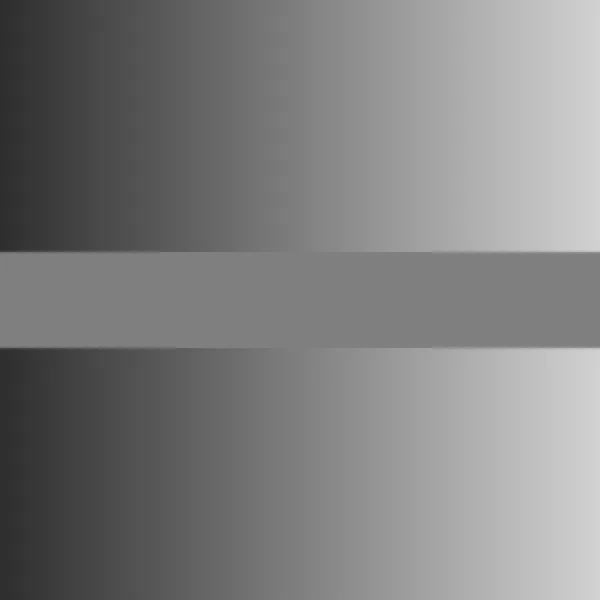 InteractiveBrightness illusionsSimultaneous ContrastA uniform grey bar looks lighter on the left and darker on the right.
 InteractiveBrightness illusionsCornsweet IllusionLeft and right halves are the same grey, but the left looks lighter.
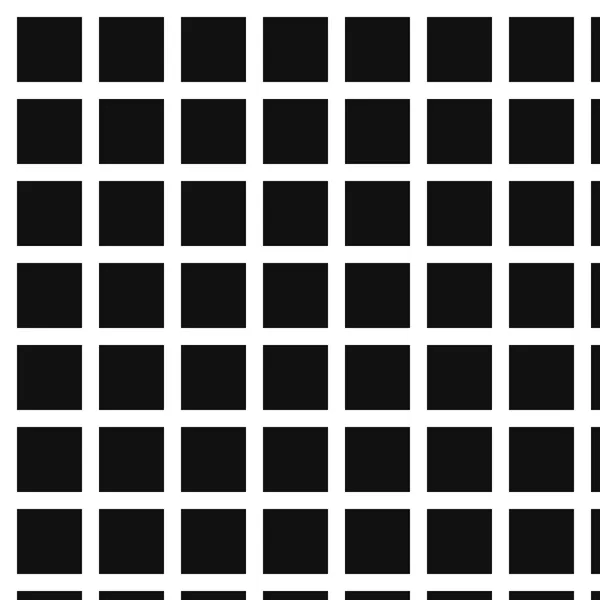 Brightness illusionsHermann GridGrey smudges flicker at the crossings of a black-and-white grid.
 Colour illusionsMunker-White IllusionThe same pink looks like two colours on blue and yellow stripes.