Cornsweet Illusion
Left and right halves are the same grey, but the left looks lighter.
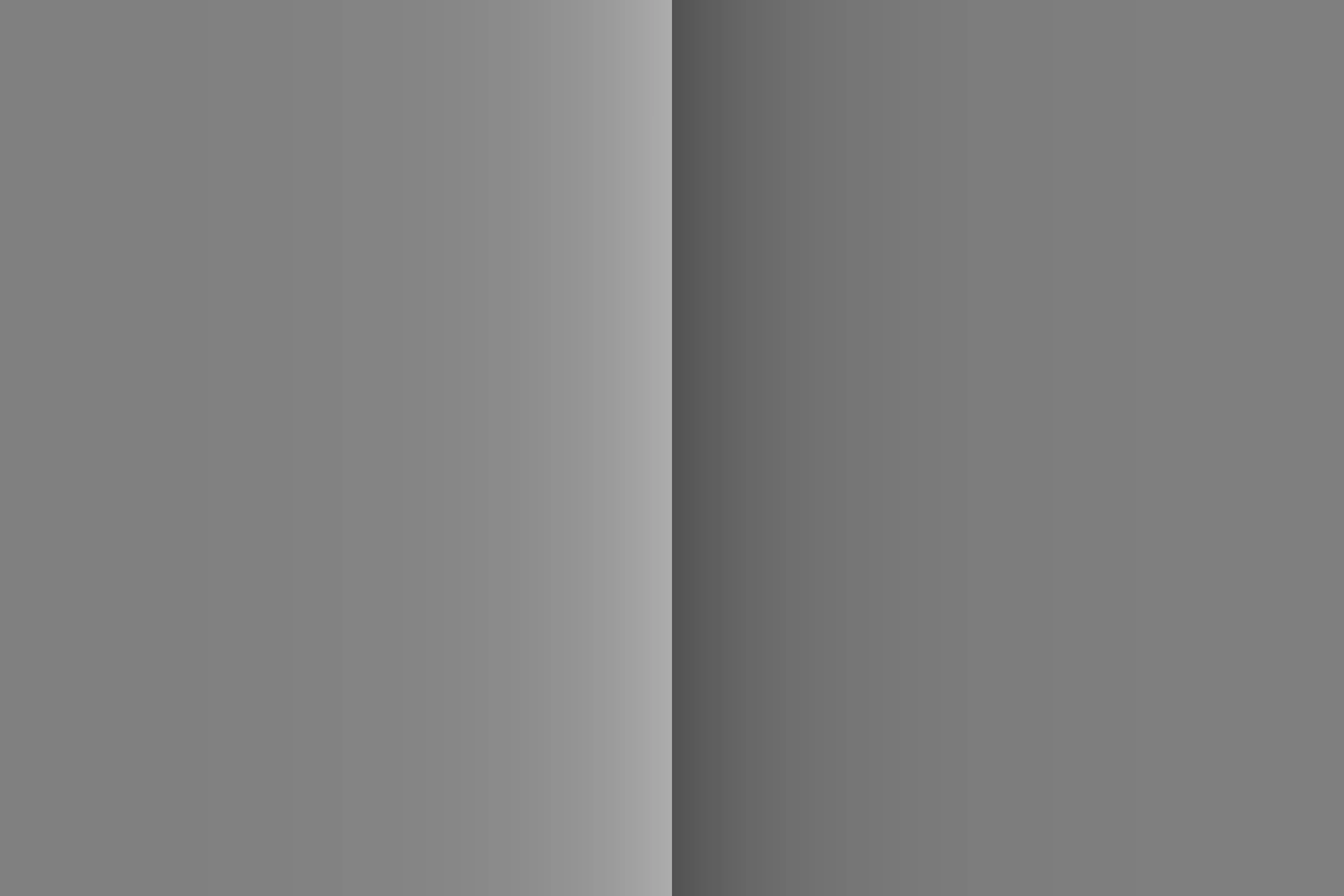
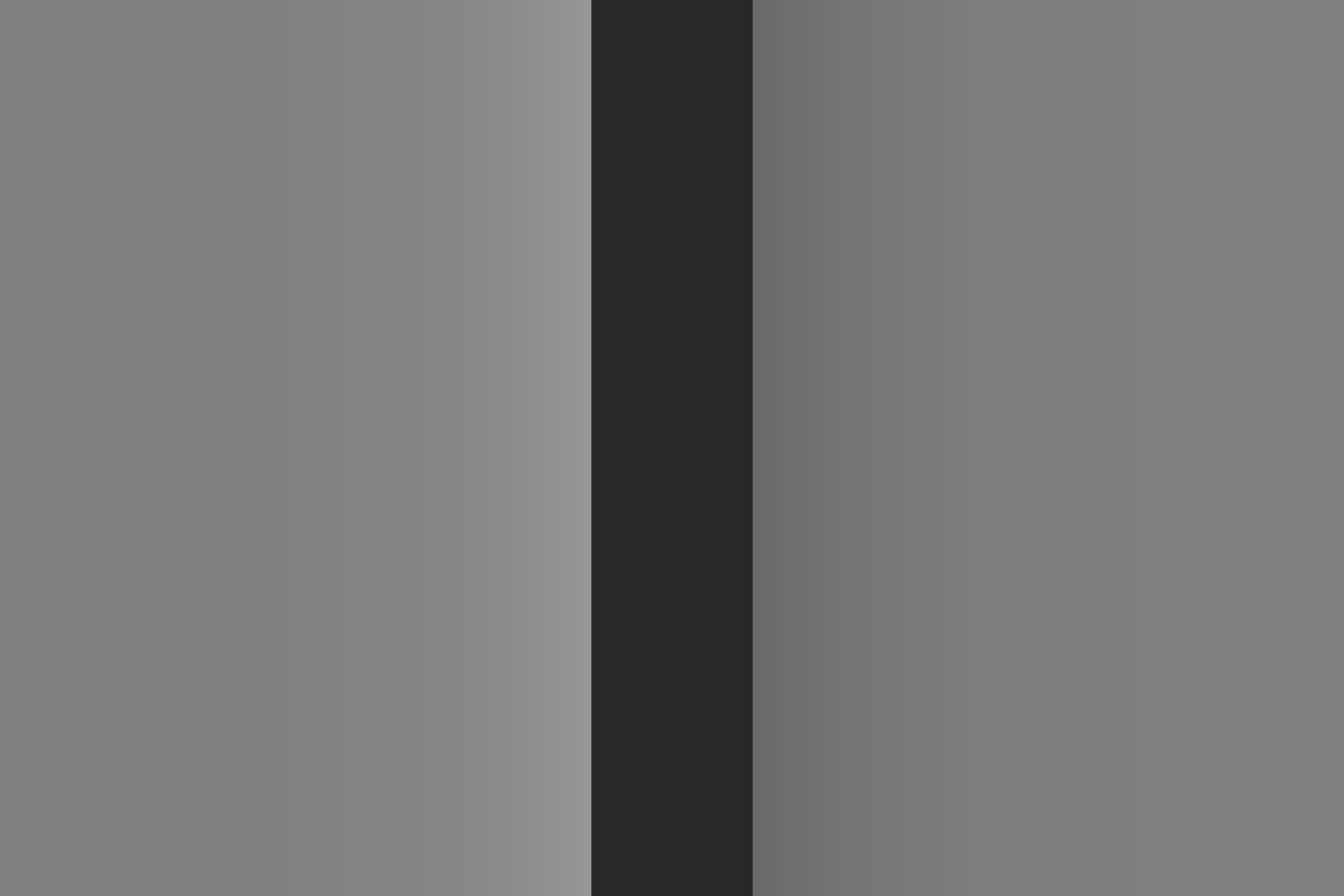
What do you see?
A grey rectangle split down the middle. The left half looks lighter than the right half. Press Reveal to cover the narrow edge with a dark bar. Now the two halves look the same, because they are: both are exactly the same grey. The only difference is a thin gradient at the boundary.
How it works
The Cornsweet illusion, also called the Craik-O'Brien-Cornsweet illusion, shows how strongly the visual system relies on edges. In the middle of the picture, the left side brightens gradually toward the boundary and then the right side starts dark and fades back to the same grey. Away from the edge, the two halves are identical.
Your brain sees the sharp step at the centre and treats it as the boundary between two surfaces. It then fills the rest of each surface with the brightness implied by that edge. Because the left side of the boundary is lighter, the entire left surface is perceived as lighter. Because the right side of the boundary is darker, the entire right surface is perceived as darker. The gradual gradients that bring the two halves back to the same level are too gentle to register as edges, so they are largely ignored.
This reflects an efficient strategy. Natural scenes are full of smooth changes in lighting, such as the gradual darkening across a curved surface or a room. Edges, by contrast, usually mark real changes in surfaces. A visual system that pays most attention to sharp changes and discounts gentle ones will recover surface colours well under real-world lighting. The Cornsweet illusion exploits this by putting all of the difference into the edge.
Researchers have found that the brain seems to propagate edge information across surfaces, a process often called filling-in. Signals at the boundary are spread inward until they meet another boundary. Neurons in visual cortex respond to the Cornsweet edge in ways consistent with this idea, and the effect is strongest when the surface is clearly bounded.
The illusion has practical uses. Image-processing techniques such as unsharp masking, used to make photographs look crisper, add Cornsweet-like profiles at edges. The result is that surfaces appear to have more contrast, even though most of the image is unchanged.
History
The effect was described by Kenneth Craik in the 1940s, by Vivian O'Brien in 1958 and by Tom Cornsweet in his influential 1970 book Visual Perception, which is why it carries all three names. The image here was drawn pixel by pixel for OpticalIllusions.com so that the two halves are exactly equal.
Try it
- Press Reveal to cover the edge.
- Place a pencil vertically over the boundary on the screen.
- Step back from the screen: the illusion often gets stronger.
- Check both halves with a colour picker after downloading the image.
Written by K.R. for OpticalIllusions.com · Updated . Illusion artwork © The Wizard Of Sales, LLC. Feel free to share a link; see our terms for reuse.
Related illusions
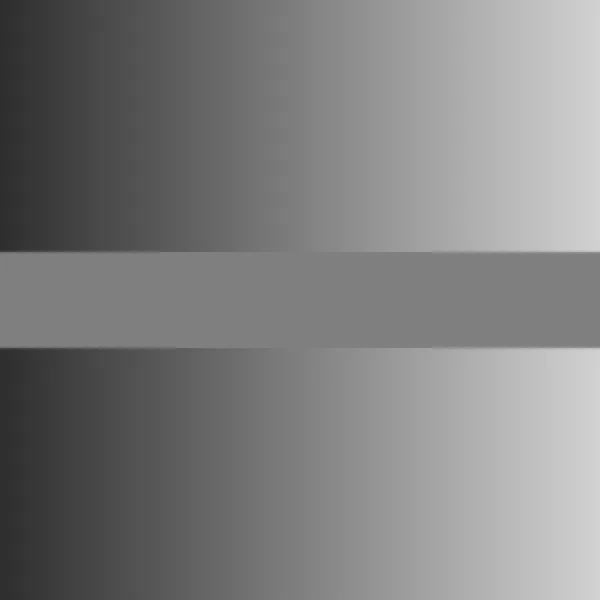 InteractiveBrightness illusionsSimultaneous ContrastA uniform grey bar looks lighter on the left and darker on the right.
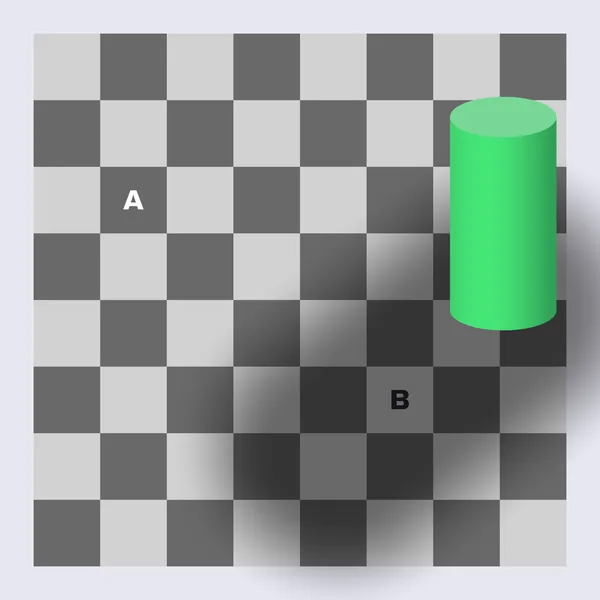 InteractiveBrightness illusionsCheckerboard Shadow IllusionA dark square in light and a light square in shadow are the same grey.
 Brightness illusionsHermann GridGrey smudges flicker at the crossings of a black-and-white grid.
 Brightness illusionsScintillating GridWhite dots on a grey grid seem to flash with black spots.