Jastrow Illusion
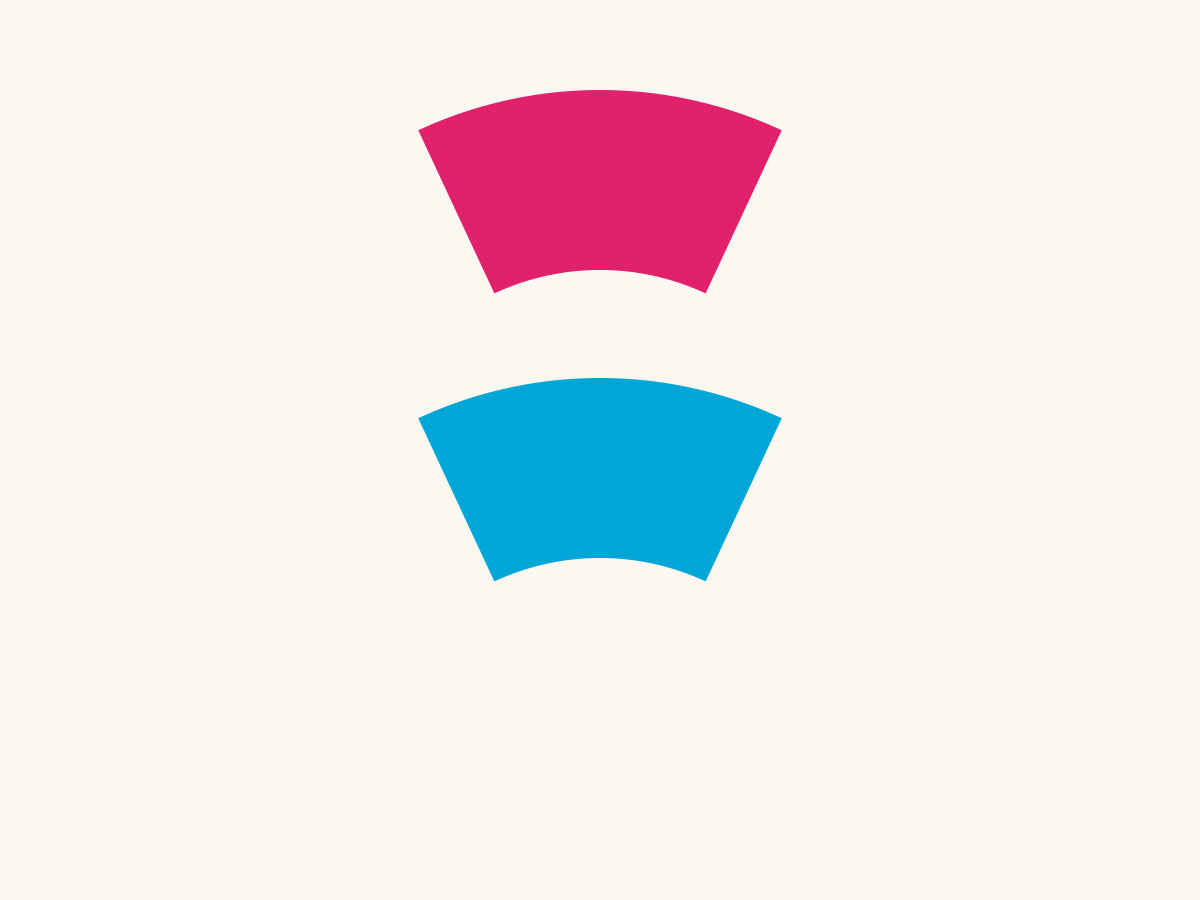
Two identical arcs, but the lower one always looks bigger.
What do you see?
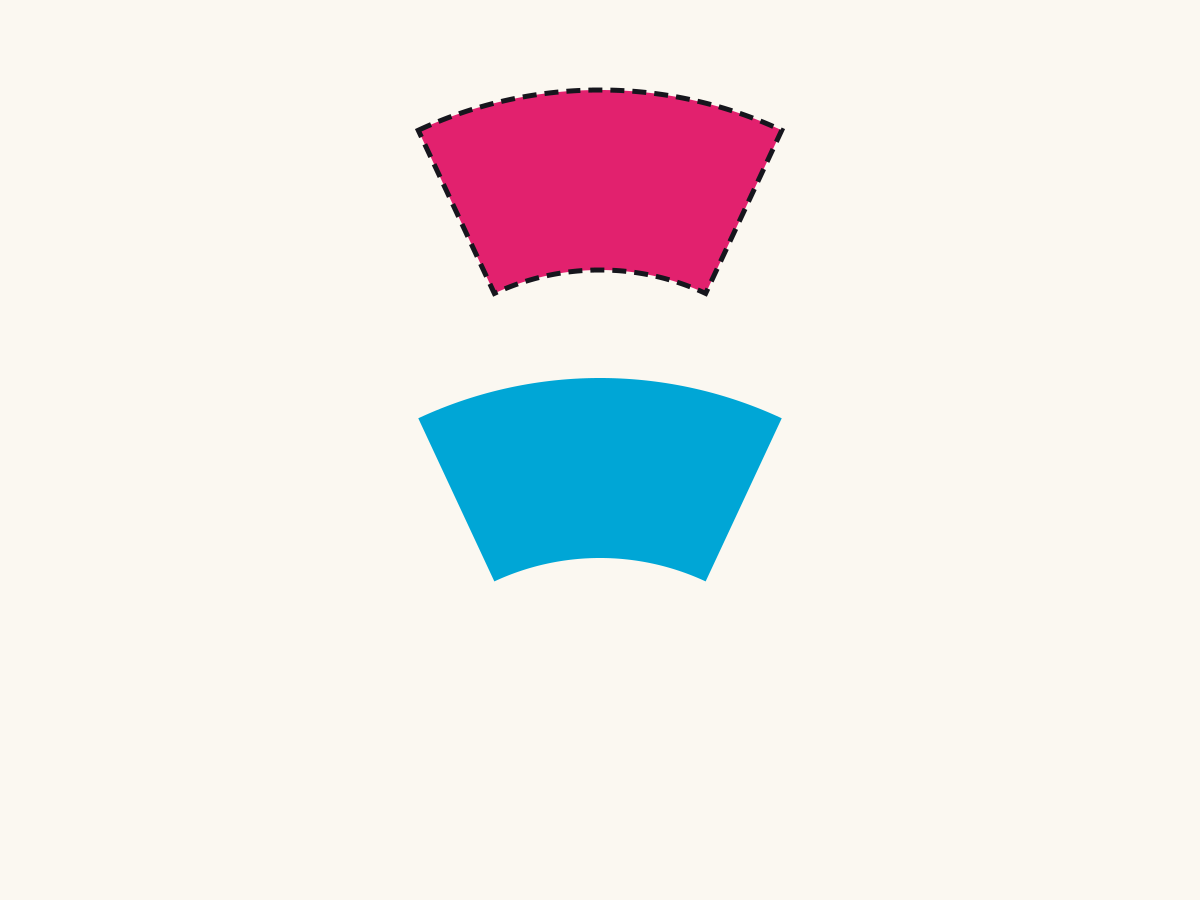
Two curved shapes, one pink and one blue, sit one above the other like slices from a ring. The lower blue shape looks clearly larger than the pink one. Press Reveal to overlay an outline of the blue shape on the pink one: they are exactly the same size and curvature.
How it works
The Jastrow illusion is a size illusion created by the edges that sit next to each other. Look at where the two shapes meet. The short inner edge of the upper shape lies directly next to the long outer edge of the lower shape. Your eye naturally compares those two adjacent edges, and the comparison makes the upper shape seem short and the lower shape seem long.
In other words, the brain judges the size of each shape partly by comparing it with its neighbour, and the most salient comparison here is between the bottom edge of the top shape and the top edge of the bottom shape. Since the curved shapes are part of a ring, the inner edge is shorter than the outer edge, and putting the short edge next to the long edge creates a striking mismatch.
Another way to think about it is through the idea of local contrast in length. Just as the Ebbinghaus illusion shows that circles look smaller among larger neighbours, the Jastrow illusion shows that a shape looks smaller when its nearest edge is next to a longer edge. Experiments that vary the curvature, gap and position of the shapes show that the illusion is strongest when the shapes are close together and when the ends of the shapes line up in a way that encourages a direct comparison.
The illusion is reversible. If you swapped the shapes, so that blue was on top, the pink one would now look bigger. That reversal is a powerful demonstration that the effect has nothing to do with the shapes themselves and everything to do with their placement.
Toy makers have used this illusion for over a century. Wooden track pieces for toy trains are often the same shape as these arcs, and children notice that a piece seems to grow or shrink when moved from one position to another.
History
American psychologist Joseph Jastrow described the illusion in 1889. Jastrow is also known for popularising the duck-rabbit ambiguous figure, which he used to show that perception depends on interpretation. The shapes on this page were drawn for OpticalIllusions.com.
Try it
- Press Reveal to overlay the shapes.
- Cut two identical arcs from paper and swap them back and forth.
- Increase the distance between them on paper: the effect weakens.
- Ask a friend which shape is bigger and then show them the overlay.
Written by K.R. for OpticalIllusions.com · Updated . Illusion artwork © The Wizard Of Sales, LLC. Feel free to share a link; see our terms for reuse.
Related illusions
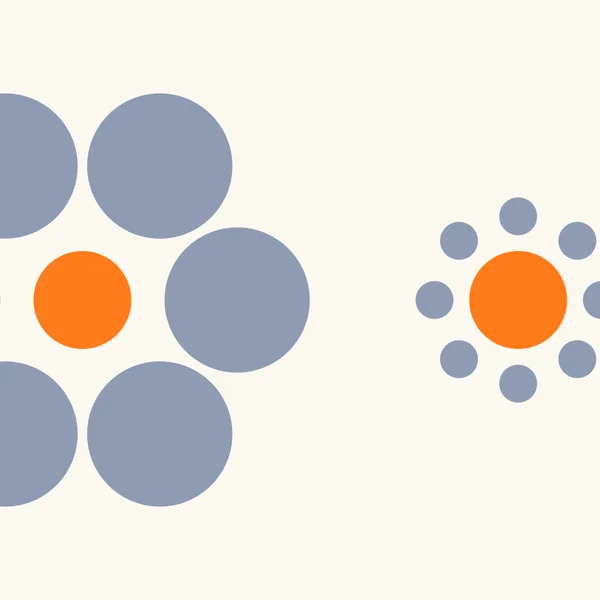 Geometric illusionsEbbinghaus IllusionA circle among giants looks small; among dwarfs it looks big.
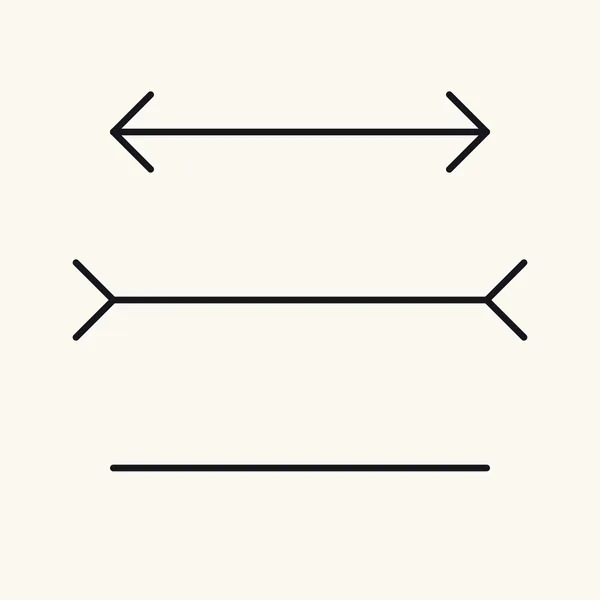 InteractiveGeometric illusionsMüller-Lyer IllusionThree identical lines that look clearly different in length.
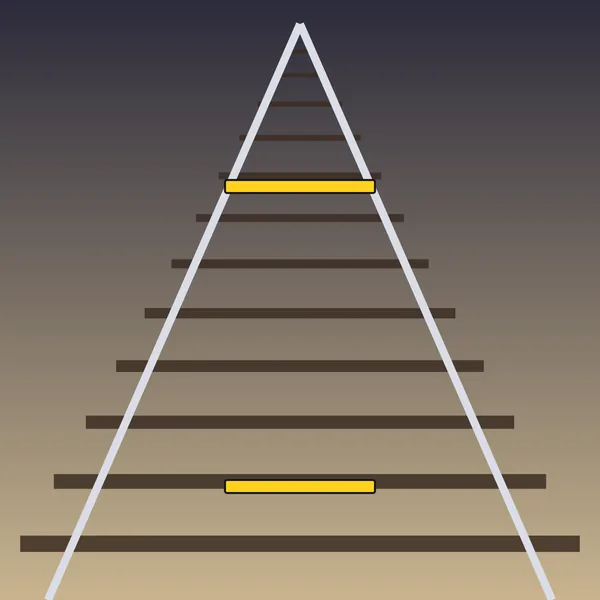 Geometric illusionsPonzo IllusionTwo equal bars on converging rails look like different lengths.
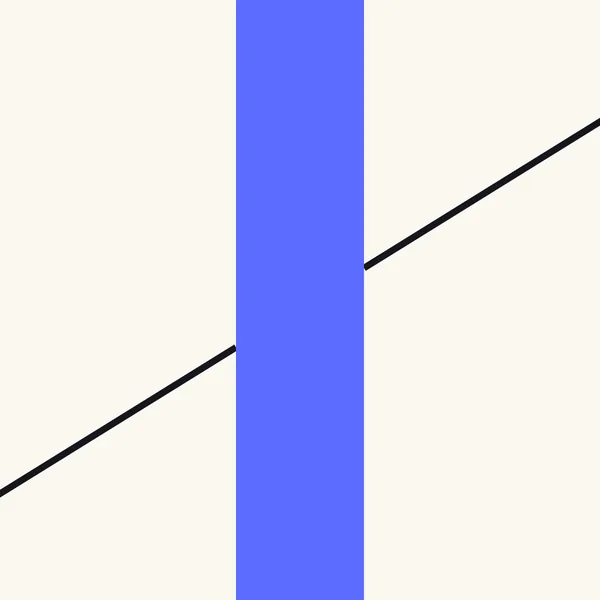 Geometric illusionsPoggendorff IllusionA straight diagonal looks misaligned where a bar crosses it.