Moiré Patterns
Two sets of rings overlap and phantom waves sweep across them.
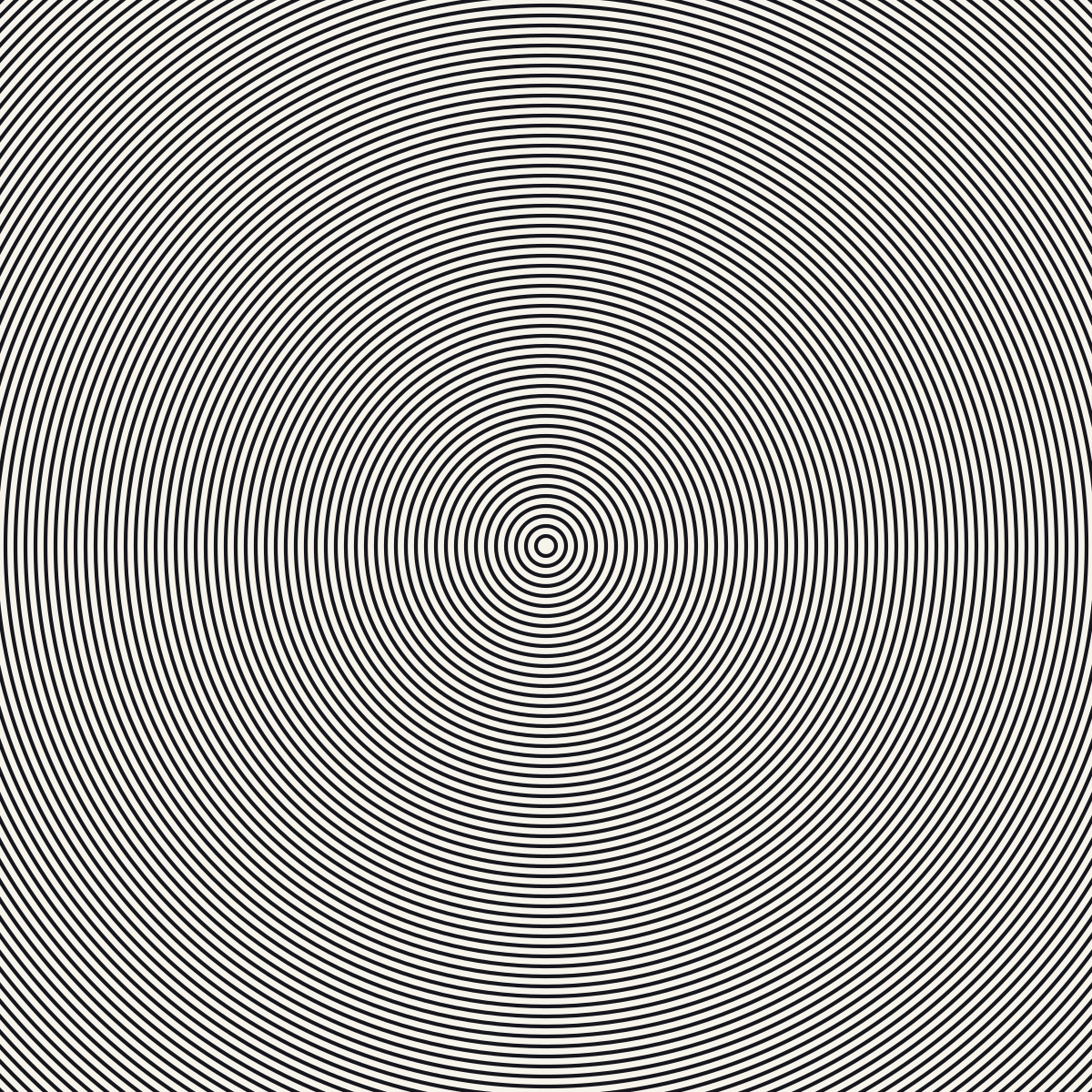
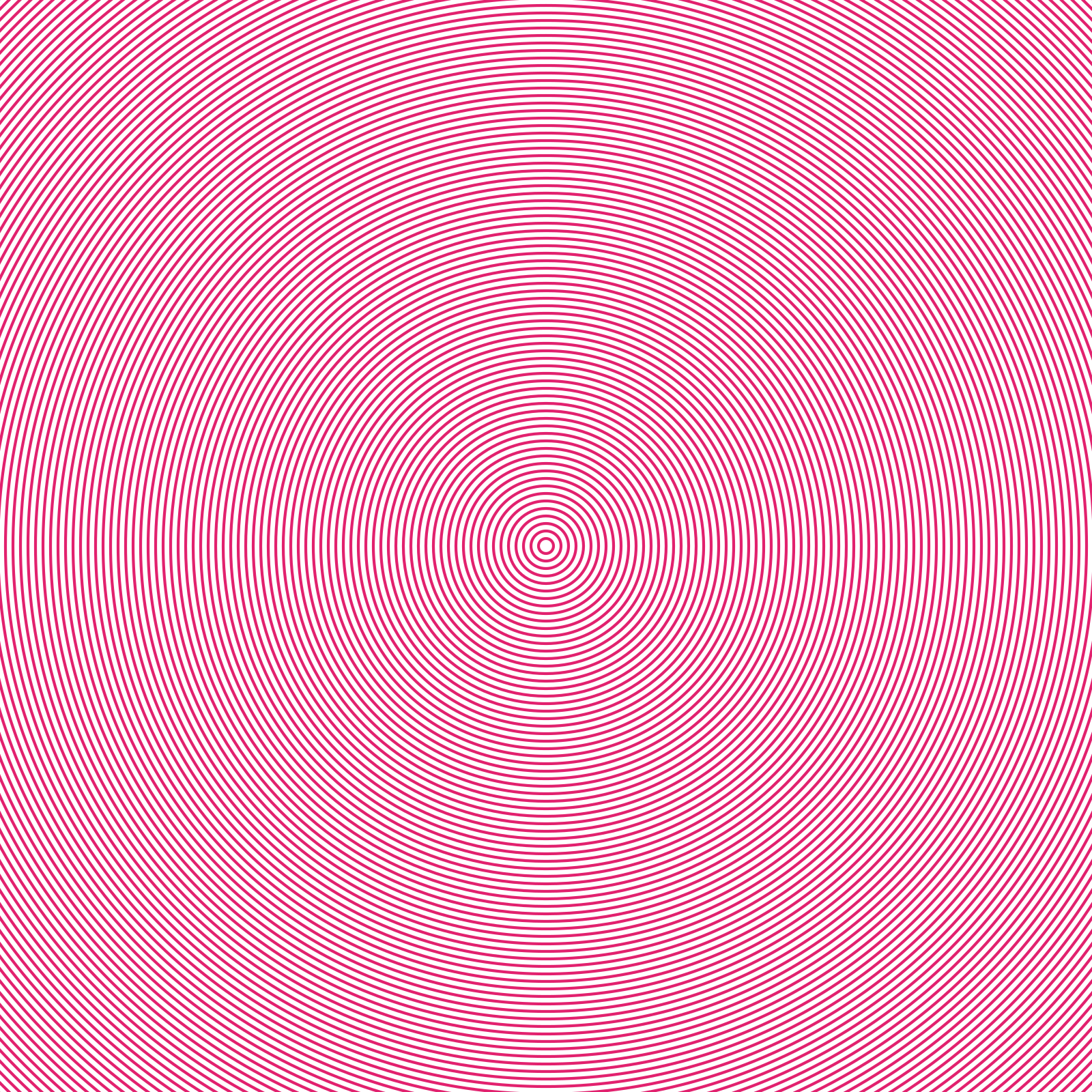
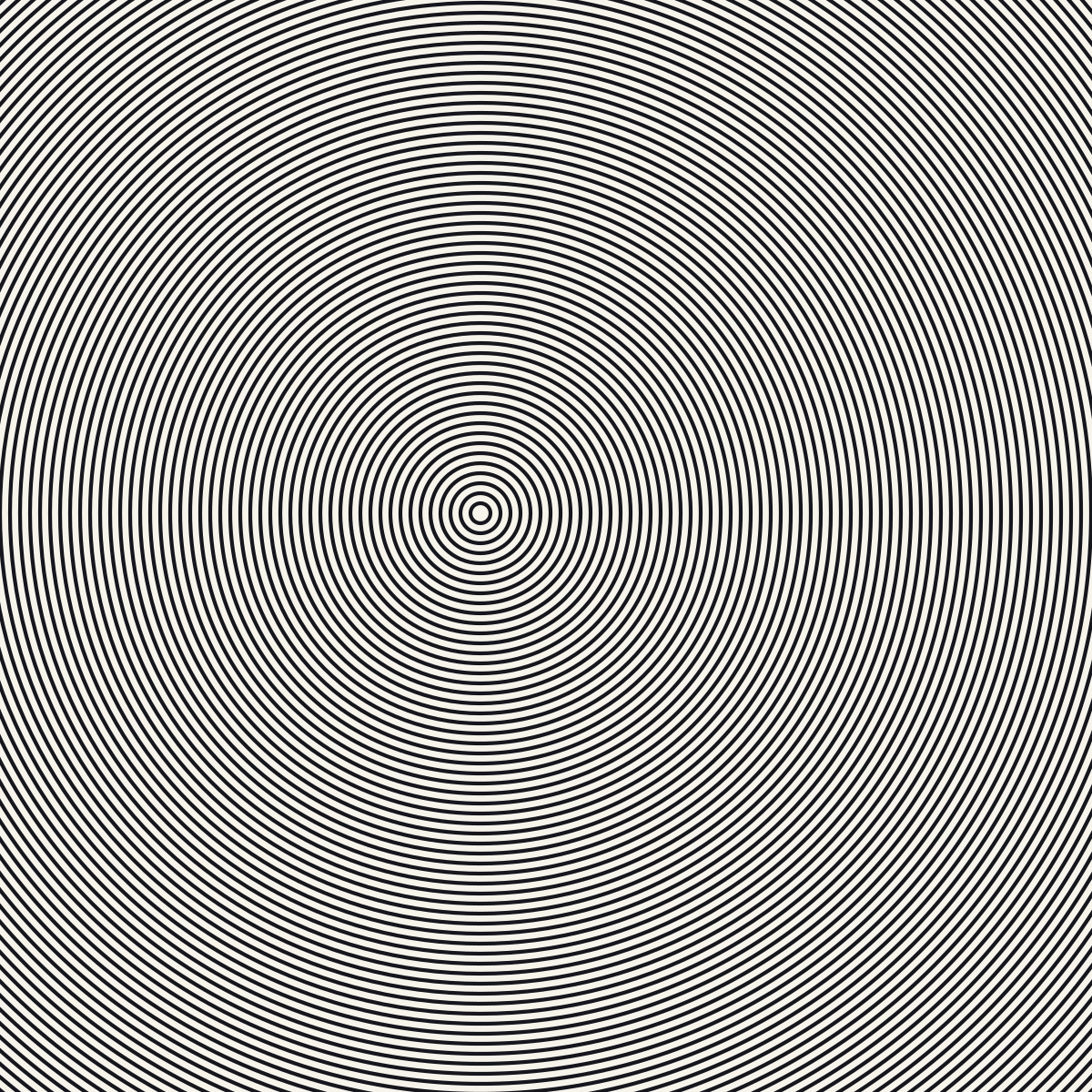
What do you see?
Two families of thin concentric rings, one dark and one pink, sit on top of each other with their centres slightly apart. Where they overlap, bold curving bands appear that are not drawn anywhere: dark fans and bright lanes radiating across the picture. Drag the pink layer and the bands swing and race across the image far faster than your finger is moving.
Get Moiré Patterns on a tee, mug or blanket
Printed to order with the OpticalIllusions.com wordmark.
How it works
A moiré pattern is an interference pattern. Each set of rings is a regular grating, a repeating series of lines with a fixed spacing. When two gratings with similar spacing are overlaid, there are places where their lines fall on top of each other, letting the pale background show through, and places where the lines of one fill the gaps of the other, covering the background almost completely. At normal viewing distance your eye cannot resolve the individual rings, so it averages them. The averaged picture shows broad light and dark bands that follow the regions of alignment and misalignment.
The geometry is predictable. For two sets of concentric circles with equal spacing whose centres are offset, the moiré bands form families of hyperbolas and ellipses around the two centres, much like the interference fringes made by two pebbles dropped in a pond. Each band traces a path along which the number of rings crossed from one centre differs from the number crossed from the other by a whole number. Change the offset and the whole family reshapes itself.
That explains why the bands move so fast. Moving the pink layer by one ring spacing, a few pixels, shifts the whole band pattern by one full band, which can be a large fraction of the picture. Moiré works as a motion amplifier: tiny real displacements become huge apparent ones. Engineers use this property to measure minute strains and alignments, and printers fight it constantly because two halftone screens at slightly wrong angles produce ugly moiré blotches.
In the illusion sense, the bands are as real as the averaging process that creates them. Look closely, or zoom in, and they disappear into ordinary lines; step back and they dominate. Your perception is reporting low spatial frequencies that exist only as a product of two higher-frequency patterns, the same thing that happens when a striped shirt shimmers on television or a phone screen photographed with a camera grows wavy bands.
History
The word comes from moire, a French name for watered silk, a fabric pressed so that its weave makes shimmering wavy patterns. In 1874 Lord Rayleigh suggested using superimposed gratings to test the quality of diffraction gratings, and moiré methods are now used in metrology, security printing and strain analysis. Op artists of the 1960s made moiré a favourite tool. The layers here were drawn for OpticalIllusions.com.
Try it
- Drag or move your mouse over the picture to slide the pink rings.
- Make tiny movements and watch the bands jump much farther.
- Press Reveal to remove one layer: the bands vanish because nothing interferes.
- Zoom in on a phone: at close range the bands dissolve into plain lines.
Written by K.R. for OpticalIllusions.com · Updated . Illusion artwork © The Wizard Of Sales, LLC. Feel free to share a link; see our terms for reuse.
Related illusions
 InteractiveMotion illusionsStereokinetic RingsTurning flat circles that suddenly pop out as a cone or tunnel.
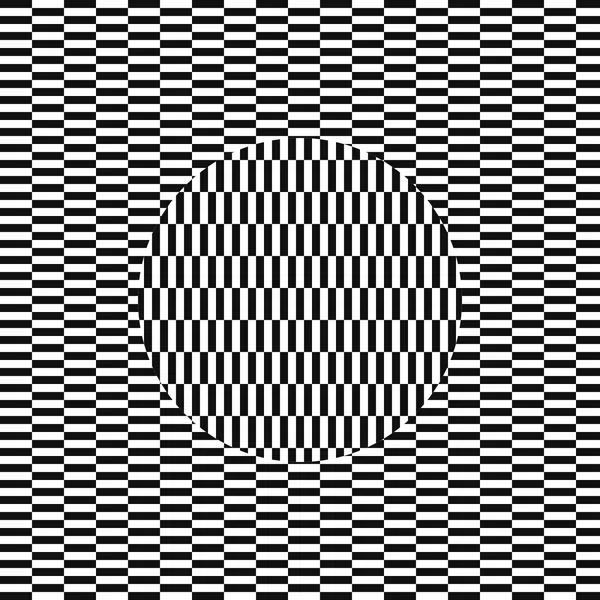 Motion illusionsOuchi IllusionA checkered disc that seems to float and slide over its background.
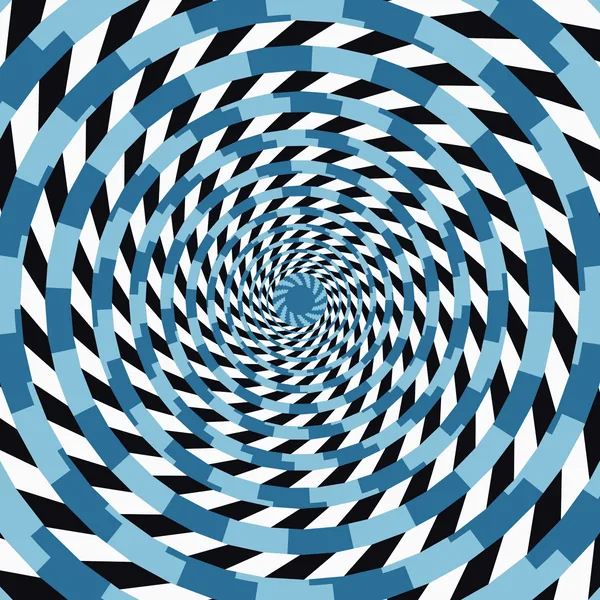 Geometric illusionsFraser SpiralConcentric circles of twisted cord that look like one big spiral.
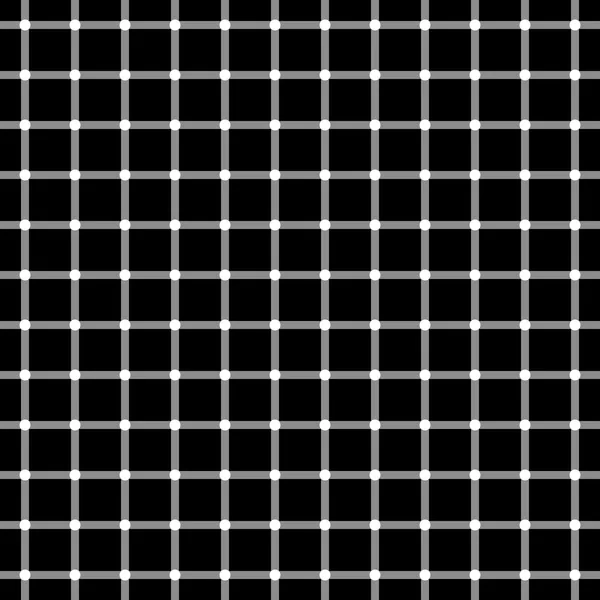 Brightness illusionsScintillating GridWhite dots on a grey grid seem to flash with black spots.